
A Woodland Stroll Through History Along the River Blackwater
The Heritage Town of Lismore sits in one of the prettiest positions of any Irish town, overlooking the River Blackwater beneath the Knockmealdown Mountains. From this vantage point, visitors can see Lismore Castle rising above the river, its turrets and stone walls a reminder of centuries of history. The castle has been home to Sir Walter Raleigh and Robert Boyle, the Father of Modern Chemistry, and passed to the Duke of Devonshire in 1753.
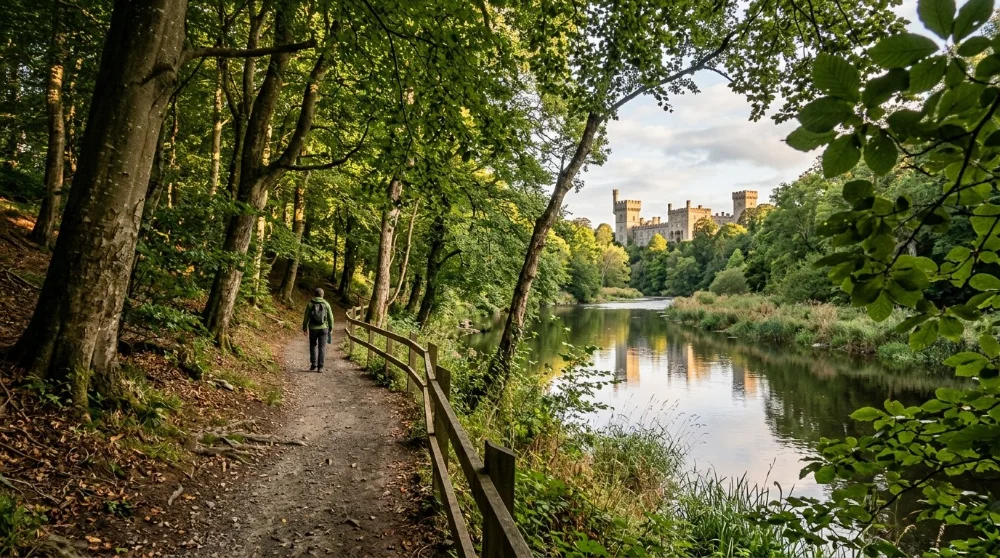
But for those who want to experience Lismore’s beauty up close, there is no better way than Lady Louisa‘s Walk. This woodland trail follows the riverbank and offers walkers a chance to step into a landscape that has remained largely unchanged for generations.
Who Was Lady Louisa?
The walk is named after Lady Louisa Cavendish, the daughter of the 7th Duke of Devonshire. She was the ancestor of the current owner of Lismore Castle, the 12th Duke of Devonshire. The Cavendish family has owned the castle since 1753, and Lady Louisa‘s connection to the estate runs deep. Her favoured trail along the riverbank has been enjoyed by generations of the family and their guests.
The walk was not just a path for the family. It was part of the working estate. Along the route, you will pass the Spout, a natural spring well that provided water for the estate workers in the castle until the early part of the 19th century. Locals still use it regularly today. The Spout is a reminder that this path was once a lifeline for the people who lived and worked on the estate.
The Walk: What to Expect
Lady Louisa‘s Walk is primarily a woodland walk along the riverbank. The trail is approximately 2 kilometres long and takes about 30 minutes to complete at a gentle pace. It is generally considered an easy route, suitable for walkers of all ages and fitness levels. The terrain is mostly grass path and boardwalk, with some sections that can be slippery or muddy after rain.
The walk begins on the town side of Lismore Bridge. Access is through black cast iron gates located on the right just before the bridge. From Lismore Heritage Centre, you can follow the N72 past the Spout to the start of the bridge. Parking is available nearby.
Once you pass through the gates, you enter a different world. The path winds along the riverbank, shaded by a canopy of trees. The noise of the town fades away, replaced by the sound of the river and the rustle of leaves in the wind.
A Walk Through Woodland
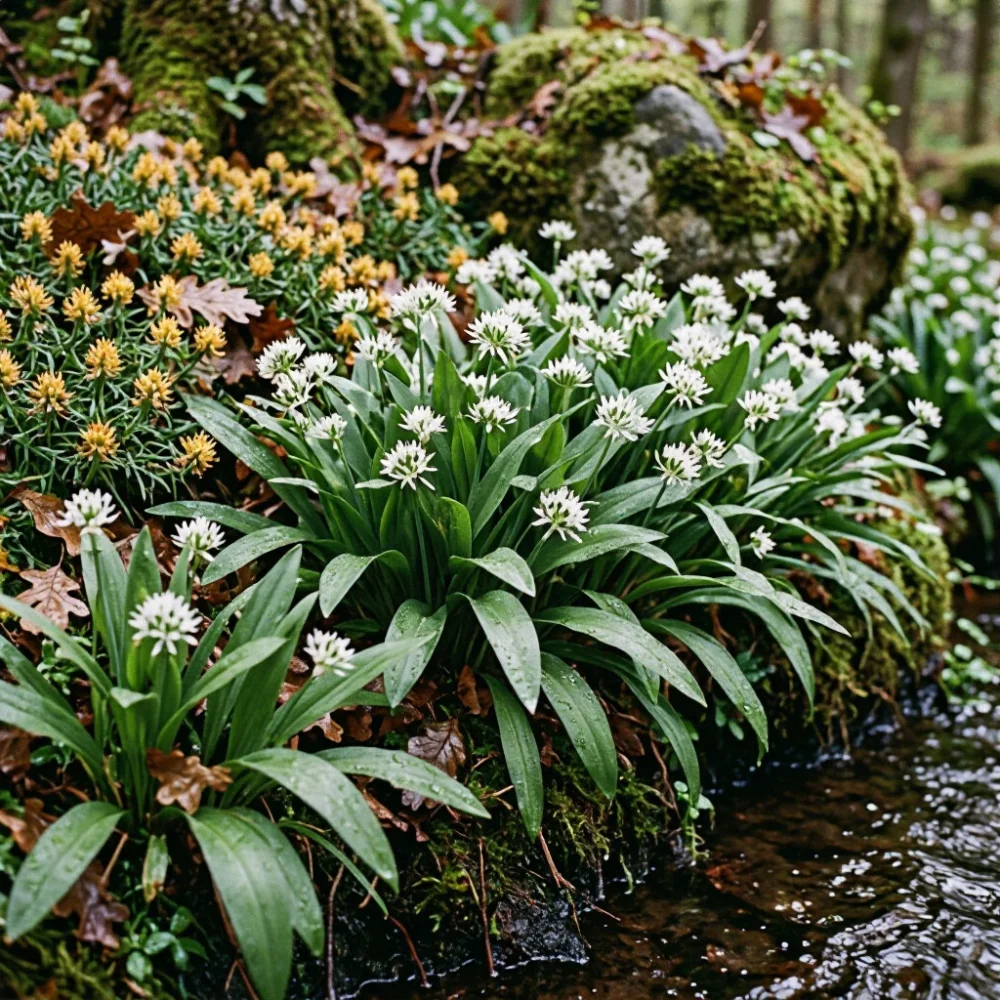
The walk is a showcase of Irish woodland plants. Along the path, you can expect to find beech, ash, ferns, spindle tree, holly and ivy. Look closer and you will also spot wood sorrel, golden saxifrage and wild garlic. These plants thrive in the damp, shaded conditions of the riverbank, creating a rich and varied ecosystem.
In spring, the woodland floor comes alive with colour. Wild garlic spreads in carpets of green and white. Wood sorrel, with its delicate white flowers, peeks through the leaf litter. Golden saxifrage adds splashes of yellow to the stream banks. The air is filled with the scent of damp earth and fresh growth.
In autumn, the beech and ash trees turn gold and bronze. The path becomes a carpet of fallen leaves, crunching underfoot. The river reflects the colours of the season, creating a scene that feels almost painterly.
Views of Lismore Castle
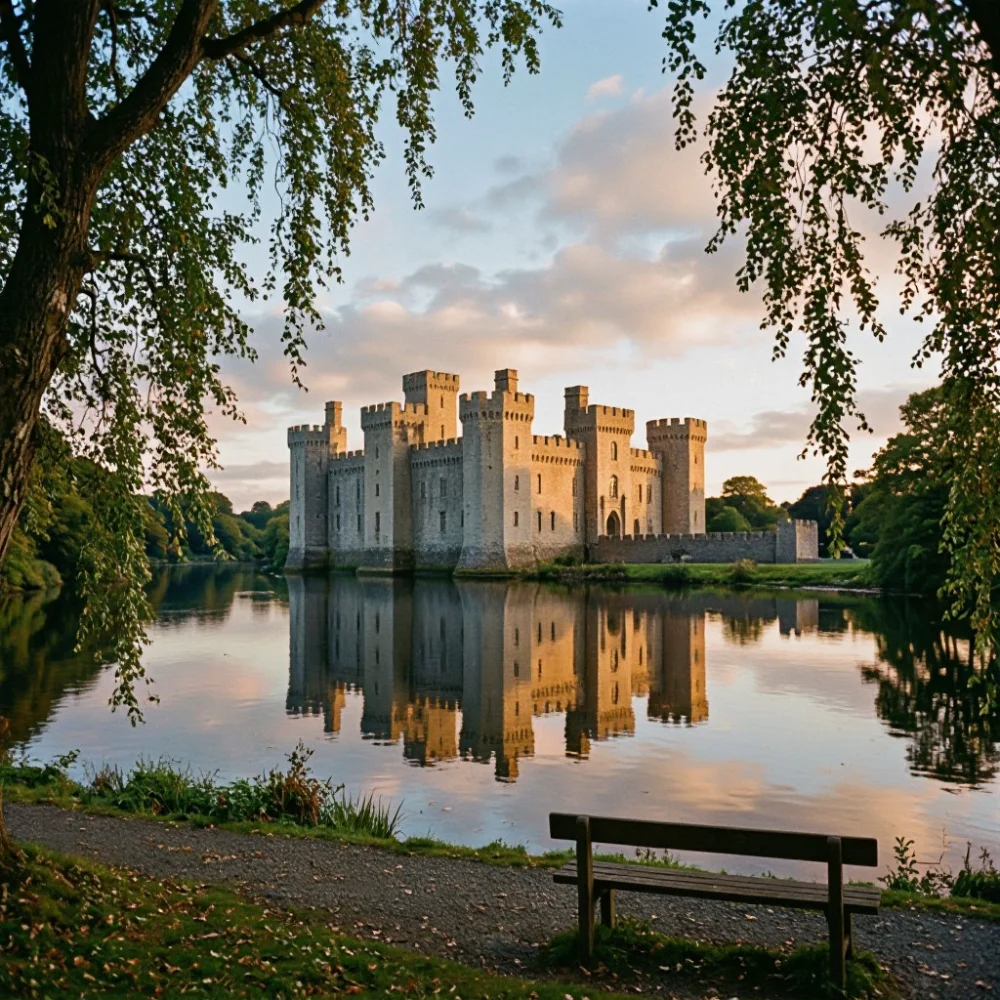
One of the highlights of the walk is the view of Lismore Castle. As you walk along the riverbank, make sure to look back. The castle rises above the river, its turrets and battlements framed by the trees. The view changes with the seasons and the light, but it is always striking.
The castle itself is closed to visitors, as it remains in the private ownership of the Cavendish family. But the gardens are open to the public from mid-March, offering a glimpse into the splendour of the estate. From the walk, you can see the upper garden, a complete example of a 17th-century walled garden first constructed by Richard Boyle, the First Earl of Cork, in about 1605.
The Turnstile and the Cathedral
The path will lead you to a turnstile. Here, you have a choice. You can turn uphill here and emerge by St Carthage‘s Cathedral. This is the route recommended by many walkers. The climb is short but offers a different perspective on the town.
St Carthage‘s Cathedral stands on a site of worship dating back to the 7th century, when St Carthage (also known as Mochuda) founded a monastery here. The site is one of Ireland‘s oldest ecclesiastical foundations. The present building dates from 1663, with major construction works in the 17th and 19th centuries. The cathedral is notable for a vibrant stained glass window by the pre-Raphaelite artist Edward Burne-Jones.
From the cathedral, you can make your way back to the town centre, completing a loop that takes in both the river and the hill.
Continuing to Round Hill
If you choose not to turn uphill at the turnstile, you can continue along the riverbank a little further towards Round Hill. This extends the walk to approximately 5 kilometres and takes about 1 hour and 30 minutes. The terrain remains easy, with a mix of riverside path, country lane and footpath.
A stand of mature pine trees on top of a mound will indicate that you are approaching the famous Round Hill, a great mound or earthwork covering two or three acres in extent. This is the site of the first monastic settlement in Lismore, founded by St Carthage adjacent to the river. Here, he built a ‘Lios‘, an Irish term used to describe a fort built of earth.
Legend has it that an old woman whom Carthage met told him that he would be founder of a ‘Lios Mor‘, meaning great fort in Irish. The monks built small beehive huts on the banks of the river, and the place extended to become a great university city and a place of holiness.
Wildlife Along the River
The River Blackwater is renowned for its wildlife. Along the walk, you may spot herons standing motionless in the shallows, waiting for fish. Swans glide past, their reflections rippling on the surface. Mallards, water hens, snipe, tern and kingfishers are also common sights.
The river is also famous for its salmon fishing. Fishing stands and stiles may be noted along the riverbank. If you are lucky, you might see a salmon leap in the water.
Practical Information
Distance: 2 kilometres (Lady Louisa‘s Walk) or 5 kilometres (including Round Hill)
Estimated Time: 30 minutes (Lady Louisa’s Walk) or 1 hour 30 minutes (including Round Hill)
Terrain: Grass path, boardwalk, country lane, footpath
Parking: Available near Lismore Bridge
What to Bring: Trekking shoes, rain gear, water, mobile phone
Accessibility: The walk is suitable for most fitness levels. Some sections can be slippery or muddy after rain.
Opening Hours: The walk is open 24 hours a day, all year round.
What Visitors Say
Lady Louisa‘s Walk has received consistently positive reviews from visitors. One reviewer described it as “a very interesting walk on the little path of Lady Louisa, it isn‘t too difficult nor too long”. Another called it “an extremely idyllic walk along the River Blackwater” with “lovely views of the castle along the way”.
A reviewer on Google gave the walk five stars, writing: “Half the way through a beautiful forest, along the river! The path goes along the steep bank of the river. Everything is safe, fenced with a railing and netting. At the top there is a beautiful view: fields, forests and a mountain in the distance”.
Another visitor recommended walking “the path to the church, which then brings you back to the castle fence. You will see a beautiful, little fountain”. They concluded: “A good idea for a nice, little and relaxing walk with beautiful views of the castle, river, church, fountain and a bit of forest too”.
Other Walks in the Area
Lady Louisa‘s Walk is just one of several marked walking trails in and around Lismore. The Riverside Walk follows the river for a longer distance, approximately 5 kilometres, and takes about 50 minutes. This walk offers more opportunities to spot water birds and takes you past the famous Round Hill.
The Towers Walk at Ballysaggartmore takes you to imposing Gothic-style gate lodges built in 1850 by Arthur Kiely Usher for his wife. This 2-kilometre walk takes about 30 minutes and passes through a diverse range of tree species. The gate lodge and towers provide a fairy-tale setting that reflects a sad period in Irish history, where extravagance and starvation lived side by side.
Millennium Park is another highlight, featuring a sculpture of St Carthage carved from ancient beech by chainsaw sculptor Nancy Hemming.
Conclusion
Lady Louisa‘s Walk offers visitors a chance to experience the beauty and history of Lismore in a peaceful, accessible way. The woodland trail along the River Blackwater is a place to slow down, breathe deeply and appreciate the natural world. The views of Lismore Castle, the wildlife along the river, and the rich history of the area make this walk a memorable experience.
Whether you choose the short 2-kilometre loop or extend your walk to Round Hill, you will discover why Lismore is one of Ireland‘s most treasured heritage towns. The walk is open all year round, free to access, and suitable for all ages. So put on your walking shoes, follow the black cast iron gates, and step into a landscape that has inspired generations.
View all Lismore Walks on the map included in the gallery images below.